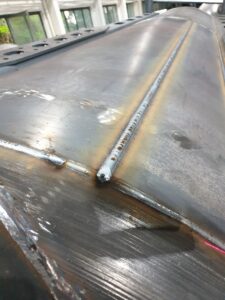
Robotic welding has revolutionized manufacturing, offering increased speed, precision, and efficiency. However, even the most advanced robots can struggle with inconsistencies in workpiece positioning or variations in joint geometry. This is where seam tracking sensors come in. These ingenious devices act as the eyes of the welding robot, allowing it to adapt to real-time conditions and deliver flawless welds every time.
What are Seam Tracking Sensors?
Seam tracking sensors are sophisticated devices that utilize various technologies like laser vision, tactile sensing, or through-the-arc sensing to detect and follow the weld joint. They provide real-time feedback to the robot controller, allowing it to adjust the welding torch position dynamically and ensure accurate weld placement even with imperfect workpiece fit-up.
Benefits of Using Seam Tracking Sensors:
- Improved Weld Quality: By accurately tracking the weld seam, these sensors minimize deviations from the intended path, resulting in consistent, high-quality welds that meet stringent quality standards.
- Increased Productivity: Seam tracking eliminates the need for time-consuming manual adjustments and rework caused by inaccurate welds, leading to faster production cycles and increased throughput.
- Reduced Costs: By minimizing errors and rework, seam tracking sensors contribute to significant cost savings in material, labor, and production time.
- Enhanced Flexibility: These sensors enable robots to handle complex weld joints and varying workpiece geometries with ease, increasing the versatility of your welding operations.
- Improved Safety: With precise weld tracking, the risk of welding defects that can compromise the structural integrity of the welded components is significantly reduced, enhancing overall safety.
Types of Seam Tracking Sensors:
- Laser Vision Sensors: Utilize laser triangulation to create a 3D profile of the weld joint. Ideal for high-precision applications.
- Tactile Sensors: Employ physical contact to trace the seam. Cost-effective and suitable for various joint types.
- Through-the-Arc Sensors: Analyze the electrical signals during welding to monitor seam position. Can be used in challenging environments.
Applications of Seam Tracking Sensors:
Seam tracking sensors find applications in diverse industries, including:
- Automotive: Welding car body panels, frames, and other components with high accuracy.
- Aerospace: Ensuring precise and reliable welds in aircraft structures.
- Construction: Automating the welding of large steel structures like bridges and buildings.
- Shipbuilding: Improving the quality and efficiency of welding in ship construction.
Conclusion:
Seam tracking sensors are invaluable tools for enhancing the precision, productivity, and cost-effectiveness of robotic welding. By enabling robots to «see» and adapt to the weld joint in real-time, these sensors pave the way for superior weld quality, reduced production costs, and increased operational flexibility. If you’re looking to optimize your welding operations, incorporating seam tracking sensors is a smart investment that will pay dividends in the long run.
0 comentarios